Community Education
Providing culturally inclusive skin health education that reflects every shade and speaks to every community.

We educate, empower, and advocate for skin health equity—because protection should be for everyone.
Equity Under the Sun™ is dedicated to reducing disparities in skin cancer awareness, prevention, and early detection through education, advocacy, and community outreach.
Every Shade. Every Story. Every Community.

Too many people believe skin cancer only affects fair skin. That misconception has created a dangerous gap in awareness and early detection — particularly within communities of color.
People with darker skin tones may have a lower overall risk, yet are often diagnosed at later stages, when outcomes are worse. We exist to challenge myths, close knowledge gaps, and empower individuals to advocate for their skin health.
Read our full story →Providing culturally inclusive skin health education that reflects every shade and speaks to every community.
Promoting routine skin examinations and warning-sign recognition so concerns are caught early, when treatment works best.
Partnering with organizations to bring resources, screenings, and sun protection directly to underserved communities.

Andrea is a Dermatology Physician Associate, educator, author, speaker, and advocate dedicated to advancing skin health equity. With over 16 years in healthcare, she has witnessed firsthand the disparities in skin cancer awareness, prevention, and early detection — and founded Equity Under the Sun™ to change them.
Learn MoreGuides, fact sheets, and checklists designed to help you protect your skin — for every shade.
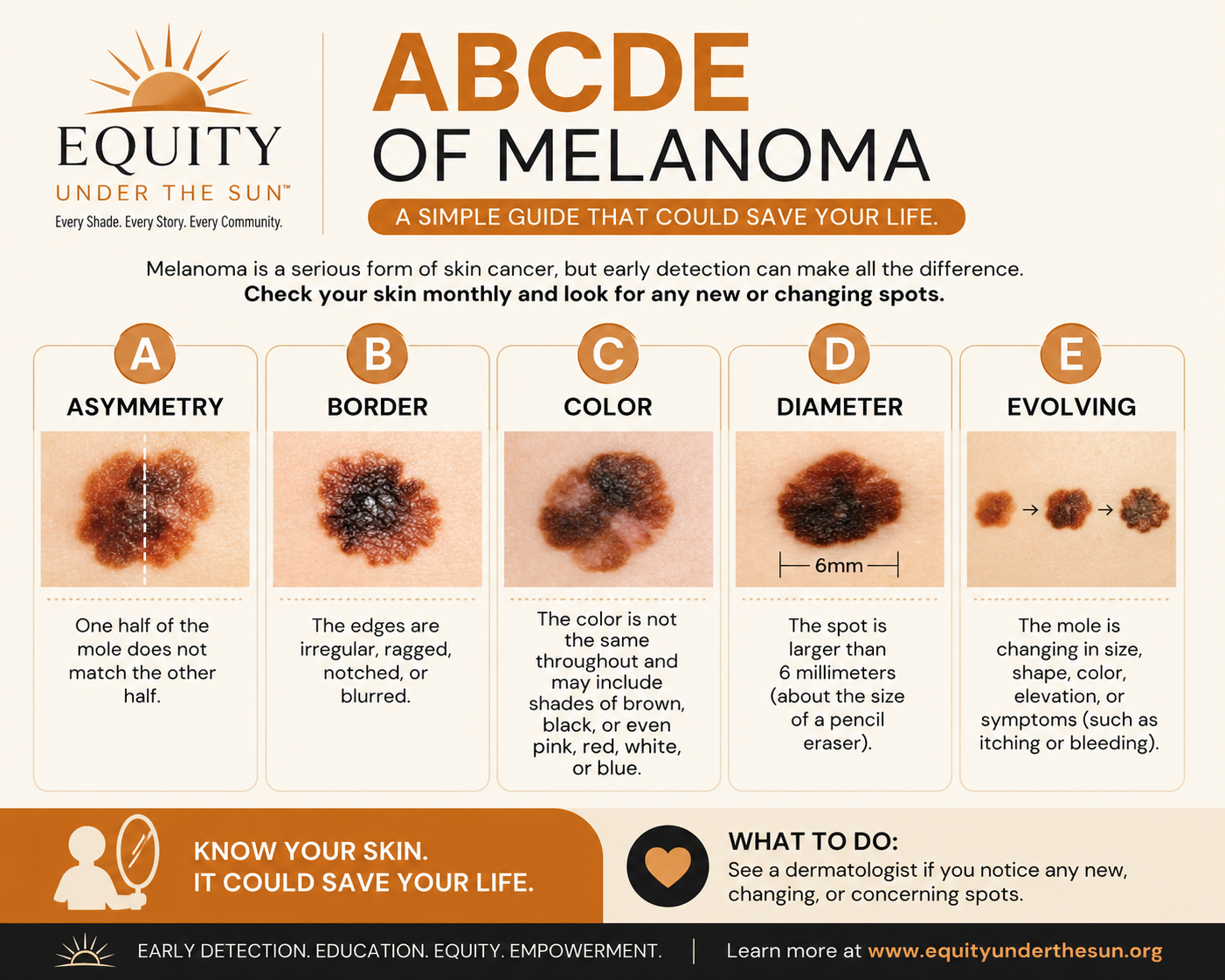
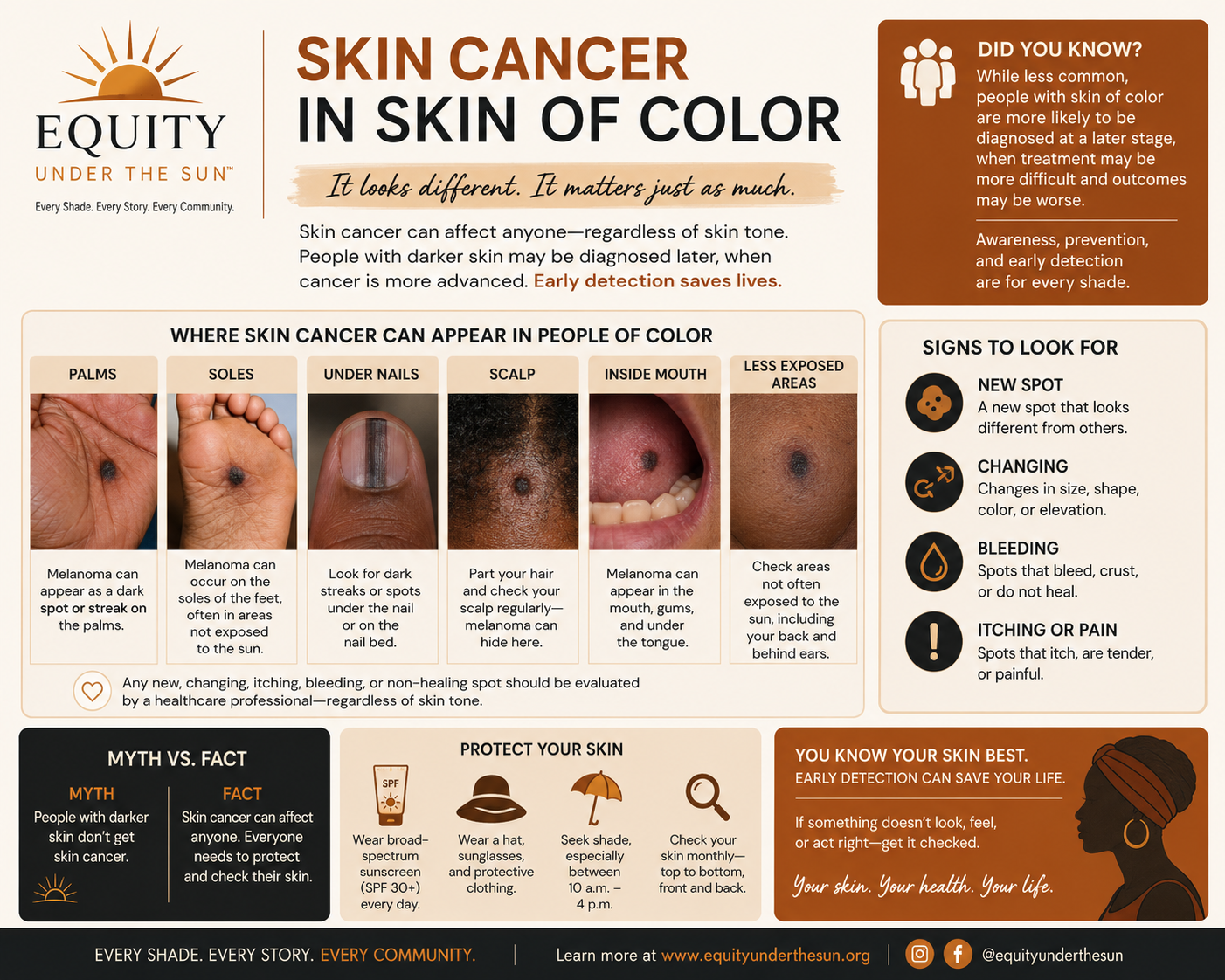
Yes. Skin cancer can affect people of every skin tone. While the overall risk may be lower, skin cancers in people with skin of color are often diagnosed at later stages, which can lead to more serious outcomes. Certain types may appear on the palms, soles, under the nails, or in areas not commonly exposed to the sun. Everyone should perform regular skin checks and seek evaluation for any changing or concerning spots.
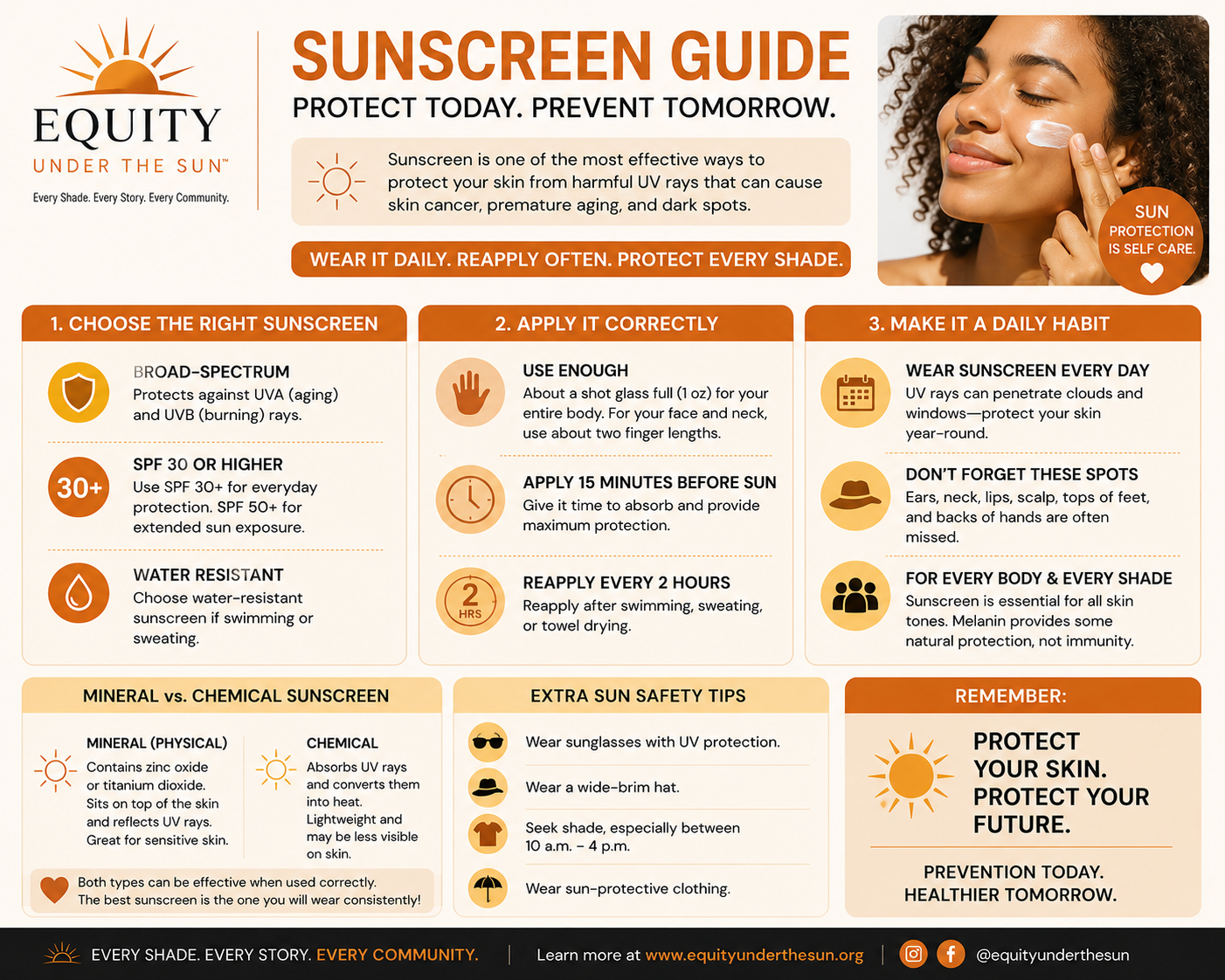
Every day, regardless of weather or season. UV rays penetrate clouds and windows, so your skin is exposed even on cloudy days or while driving. Apply every morning as the last step in your skincare routine and reapply every two hours when outdoors — especially after swimming or sweating.
Choose a broad-spectrum sunscreen with SPF 30 or higher. Broad-spectrum protects against both UVA rays (aging) and UVB rays (sunburns). If you spend extended time outdoors or have a history of skin cancer, SPF 50 may provide additional protection.
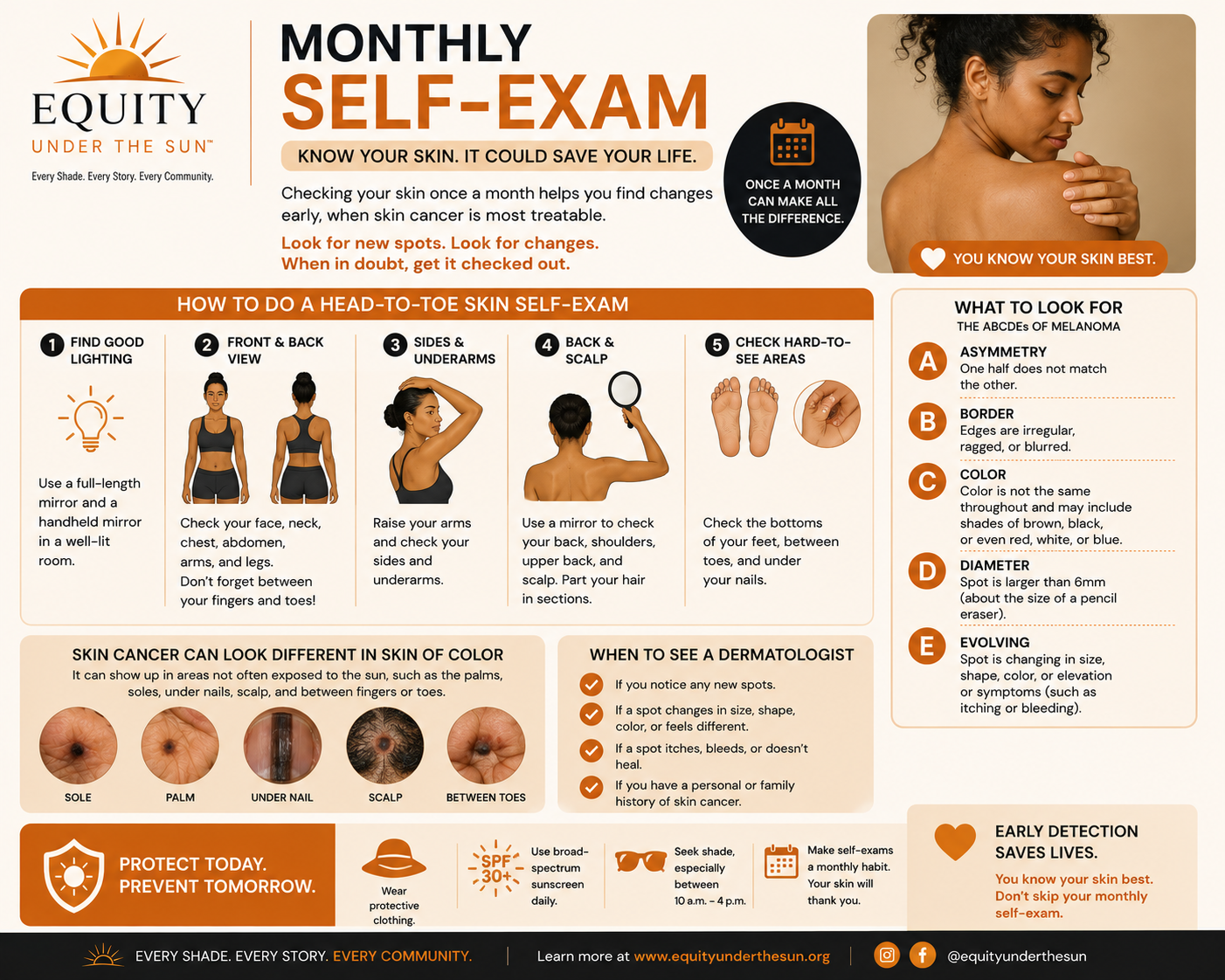
A monthly self-skin exam is recommended. Check your entire body, including your scalp, palms, soles, nails, and hard-to-see areas. Look for any new, changing, itching, bleeding, or non-healing spots and contact a dermatology provider if anything looks concerning.
Your time, voice, and support help us educate communities, promote early detection, and create lasting change.